Keynote Speakers
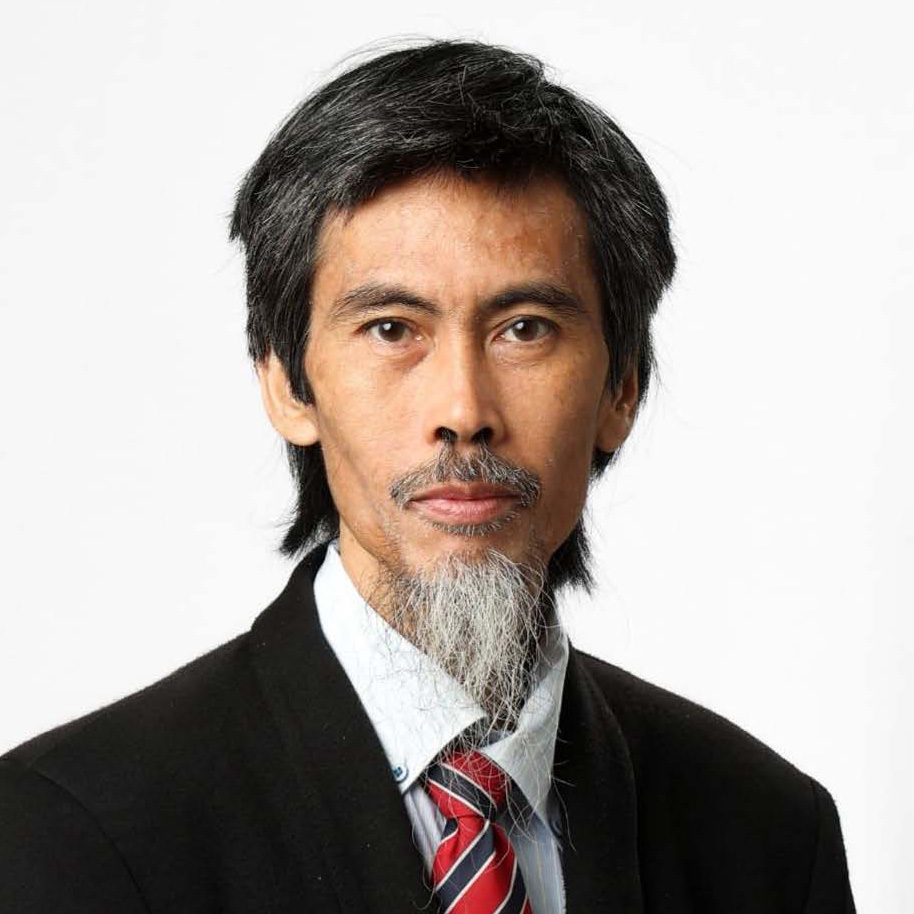
Prof. Dr. Raymond Ooi Chong Heng
Universiti Malaya, Malaysia
Prof Dr. Raymond Ooi is a quantum physicist well known locally and internationally in quantum optics, nonlinear optics, plasmonics, molecular spectroscopy, statistical physics of Bose-Einstein condensates and interactions with intense laser pulses. In 2025 he was elected a Fellow of OPTICA for the development of quantum theoretical framework (Heisenberg-Langevin theory) on nonclassical photon correlations in Raman and quantum plasmonic systems. In 2013 he won the Malaysia Toray Science Foundation Science & Technology Award. He was elected a Fellow of the Academy of Sciences Malaysia (ASM) in 2015. He is also an elected Fellow of Academy of Engineering and Technology of the Developing World (AETDEW). He was a Visiting Professor at Nanyang Technological University in 2015-2019.
Raymond Ooi obtained his Dr. rer. nat (PhD) from Universitaet Konstanz, Germany in 2003. He spent 3 years as a postdoc at Texas A&M University, was a regular Visiting Scientist at Princeton University and Max-Planck Institut fuer Quantenoptik, and has collaborated with reputed leaders in quantum physics. He has contributed to the theory of strong fields interactions while at KAIST and Korea University. In 2010, he made a sacrifice to return and develop quantum optics research for Malaysia, initiated "Quantum and Laser Science" research center at Universiti Malaya. Despite being a theorist, he recognizes the importance of experimentation, has secured a High Impact Research grant and single-handedly developed experimental lab on quantum and laser science, including the Femtosecond Laser and Optics facility. He leads the national quantum communication research program and also engaged in interdisciplinary/multidisciplinary projects including brain research, green technology and poverty alleviation. He has 2 patents on harnessing green energy. Raymond Ooi has pioneered quantum optics and technology research and education in Malaysia, developed an undergraduate course on Quantum Optics and a postgraduate course on Quantum Technology. Besides being invited/plenary speaker at more than 35 international conferences, he regularly gave open public Seminars and Workshops to inspire students and the public on the wonders of quantum science and technology. He was invited a Guest of Honour at 6th Science & Technology Program (STEP) and Mustafa Prize Award ceremony, Tehran, Iran in 2019. In 2018, he successfully initiated and chaired the first international conference on Quantum and Nonlinear Optics (QNO2018) attended by many luminaries in the field through the support of three external funds.
Keynote Title: Quantum Spectral Sensing with Atomic Raman System in Cavity with Controllable Laser and Magnetic Fields
In this era of rapid advancement in quantum technology, atomic quantum system has emerged as a promising component with potential applications in quantum sensing, communication and information processing. This study investigates the dynamics of an open quantum system in a cavity interacting with phonon and radiation baths, modeled using quantum master equations in both von Neumann and Lindblad forms to accurately capture dissipation and decoherence effects. To control and mitigate decoherence, the system is coupled to laser fields and magnetic fields, with dynamics simulated. The analysis incorporates Raman transitions and a time-independent Rabi frequency to study system correlations, covariances, and spectra. Furthermore, time-dependent Rabi frequencies are introduced to explore extended system dynamics and refine control strategies. These results provide valuable insights into optimizing quantum memory performance in realistic quantum environments.
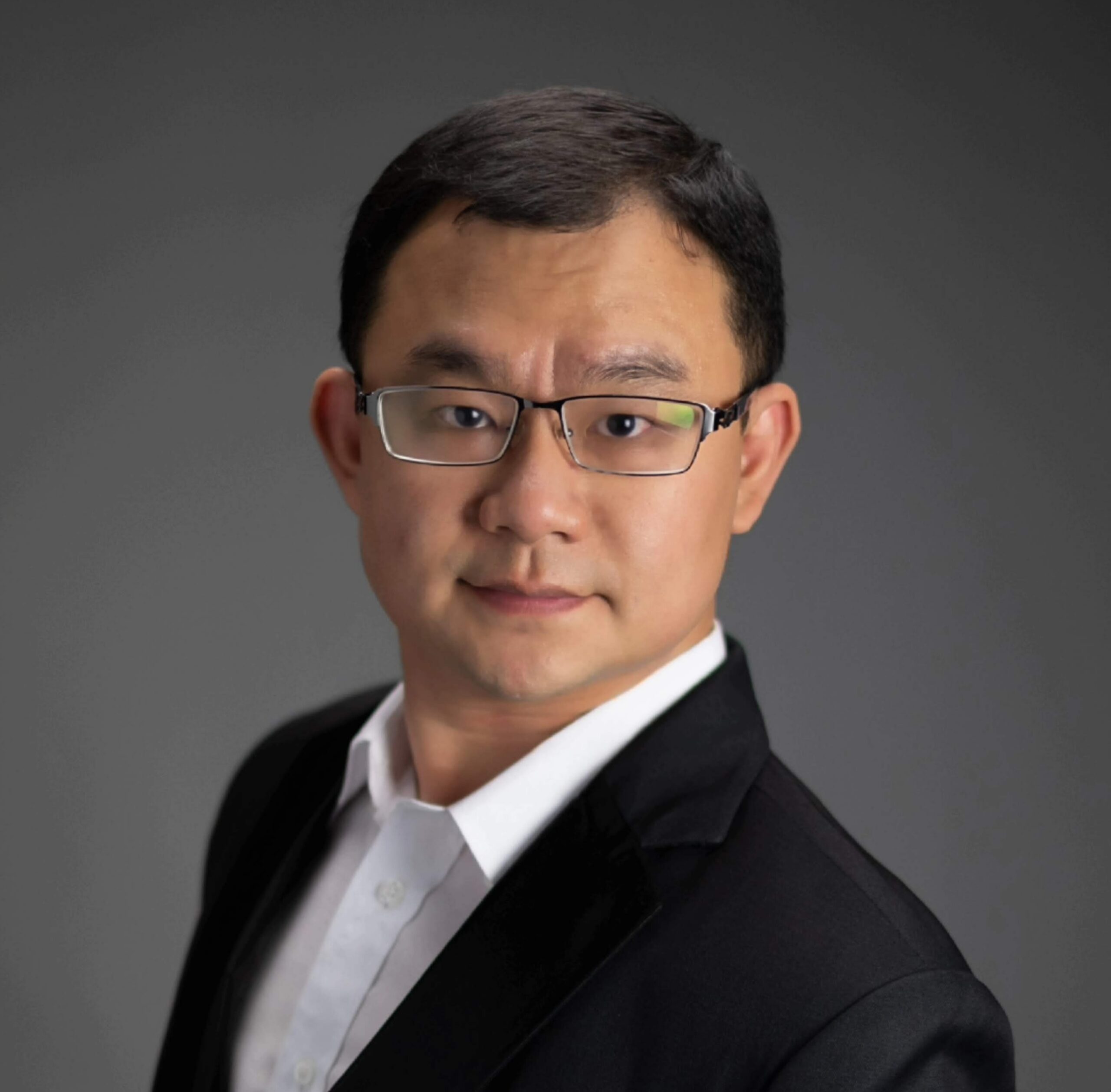
Mr. Ong Soon Ee
Principal Engineer, Intel
Mr. Ong Soon Ee is a Principal Engineer at Intel with nearly three decades of R&D and technology leadership experience spanning edge-to-cloud computing, artificial intelligence, intelligent sensing and large-scale software ecosystems. He also serves as Chief Technologist of an internal AI venture, where he has led the development of enterprise AI platforms and emerging AI solutions from concept to deployment.
His current work focuses on advancing AI across the computing stack, including upstream enablement and optimization of major AI frameworks, distributed computing technologies, and the development of practical recipes and reference architectures for customers. His work spans ecosystems such as PyTorch, Hugging Face and oneAPI, as well as emerging areas including Generative AI, agentic systems, model post-training and reinforcement learning.
One of Soon Ee's focus areas is bridging advances in AI models with the physical world, where sensing, edge computing and intelligent systems must operate within real-world constraints such as latency, power, connectivity, reliability and scale. A two-time winner of Intel's Global Intrapreneurship Incubation program, Soon Ee combines deep technical expertise with a technopreneurial perspective on translating emerging technologies into scalable, deployable systems and new business capabilities.
Keynote Title: Beyond Smart Sensors - Where AI Meets the Physical World
AI is rapidly moving beyond generating content and making predictions. The next frontier is the physical world—where intelligent systems must perceive their environment, reason under uncertainty, make decisions, act, and increasingly learn from the outcomes. This shift is redefining the role of smart sensors. Yesterday, sensors primarily produced data. Today, they increasingly enable AI-driven perception and inference. Tomorrow, they will become part of distributed intelligent systems that connect perception, reasoning, action and learning across devices, edge infrastructure and the cloud. This keynote explores the technologies and architectural shifts enabling this transition, from Edge AI, multimodal and foundation models to agentic systems, model post-training and reinforcement learning. It will also examine a broader shift in where AI innovation matters: from better models, to better AI stacks, and ultimately to better end-to-end intelligent systems. As models become increasingly capable, real-world intelligence will depend just as much on system design—latency, power, connectivity, reliability, hardware-software co-design and continuous adaptation. The next generation of smart systems will not be defined by smarter sensors alone, but by how effectively AI can connect intelligence to the physical world.
